Quick answer: both protect your skin — mineral sits on top and reflects UV rays, chemical absorbs them. The best one? The one you’ll actually wear every season. Whether you’re in the season of finally remembering SPF or the season of upgrading to a formula you love, we’re here for it — and Beauty Bank members enjoy 20% off SPF all month long. Here’s how to choose yours.
Let’s talk about the one product we’d save in a fire.
If you only do one thing for your skin this year, make it sunscreen. We mean it. We’ve watched clients invest beautifully in filler, lasers, and skin treatments, only to skip the daily SPF that protects all of it. So this Skin Cancer Awareness Month, we’re getting honest about what actually belongs on your face — and on your kids’, and on your partner’s, and on the back of your neck when you’re running errands.
Because here’s the truth: sunscreen isn’t about vanity. It’s about showing up for your future self. Whether you’re in the season of remembering SPF for the first time or the season of finally finding one you’ll actually wear every day — we’re here for it.
Mineral vs. chemical: what’s the actual difference?
Both work. Both protect. They just go about it differently.
Mineral sunscreens (look for zinc oxide or titanium dioxide on the label) sit on top of your skin and physically deflect UV rays — like tiny mirrors. They start working the moment you apply them, tend to be gentler on sensitive or rosacea-prone skin, and are usually the move for post-treatment skin. The trade-off used to be a chalky white cast, but modern formulas have come a long way.
Chemical sunscreens absorb UV rays and convert them to heat your skin releases. They’re typically lighter, more cosmetically elegant, and easier to layer under makeup. They need about 15 minutes to activate, so apply before you head out the door.
Neither is “better” in the abstract — the best sunscreen is honestly the one you’ll reapply. But for our Florida clients especially, where humidity, salt air, and that relentless sun do their thing year-round, formulation matters more than most people realize.
Why daily SPF protects every other treatment investment
Think of it this way: you wouldn’t refinish a beautiful piece of furniture and then leave it outside in the sun. Your skin works the same way.
UV exposure is one of the most significant contributors to visible signs of aging — fine lines, uneven tone, loss of firmness, and the discoloration we work so hard to address with treatments. When you invest in injectables, lasers, peels, or microneedling, you’re investing in how your skin looks and feels. Skipping SPF lets the clock fast-forward right back.
A few things daily SPF helps support:
- Your filler and wrinkle relaxer results. Sun damage breaks down collagen, which is the foundation those treatments work alongside.
- Your laser and IPL investment. Treated skin is more photosensitive — and pigment changes can undo your results quickly without protection.
- Your at-home routine. Retinols, vitamin C, and exfoliating acids all increase sun sensitivity. SPF is what makes them safe to use.
Translation: that $200 serum is doing a lot less if you’re skipping the $50 sunscreen.
Three medical-grade SPFs our providers actually recommend
We carry medical-grade skincare for a reason — these formulations are tested, dermatologist-developed, and held to a higher standard. Here are three favorites our providers reach for, especially for our Florida clients dealing with year-round sun.
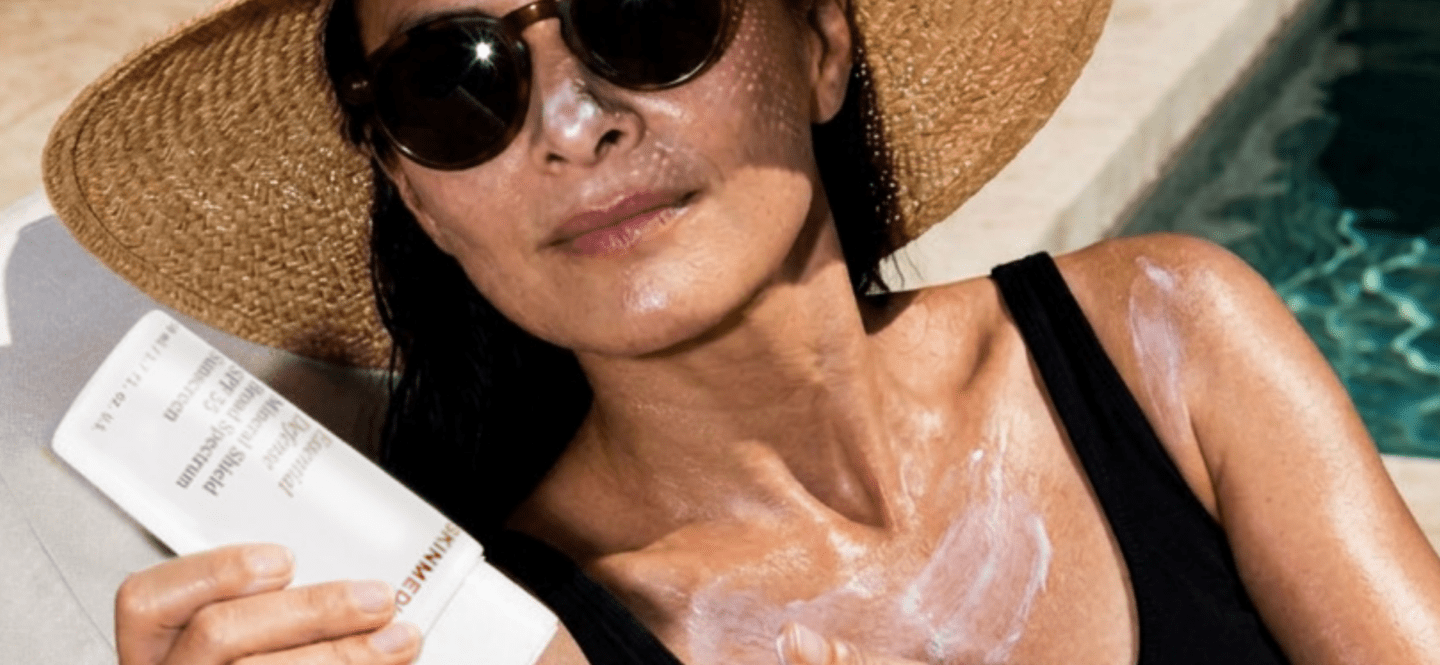
SkinMedica Essential Defense Mineral Shield SPF 35 A 100% mineral formula that wears beautifully under makeup and feels lightweight even in humidity. Great for sensitive, post-treatment, or rosacea-prone skin. The tinted version is a quiet hero for anyone who wants a little evened-out coverage without piling on foundation.
ALASTIN HydraTint Pro Mineral Broad Spectrum Sunscreen SPF 36 Mineral protection with a universal tint that works across skin tones, plus skin-supporting peptides and antioxidants built in. Our humidity-prone clients love this one because it doesn’t slip and slide by 2 p.m.
SkinCeuticals Physical Fusion UV Defense SPF 50 Higher SPF, a sheer universal tint, and it layers beautifully under makeup. A go-to for beach days, golf mornings, and anyone whose lifestyle involves being outside more than they planned.
Not sure which is right for your skin type, season of life, or beauty routine? That’s exactly the kind of conversation we love having at your next visit. Your provider can help you find the formula you’ll actually reach for every morning.
How to actually use it
A few honest reminders:
- Use enough. Two finger-lengths for the face and neck. Most people use about a quarter of what they need.
- Reapply. Every two hours when you’re outdoors, sooner if you’re swimming or sweating. Powder and stick SPFs make this easier on top of makeup.
- Don’t forget the in-betweens. Ears, the tops of your hands, the back of your neck, your scalp part line, the V of your chest. These are the places we see sun damage show up most.
- Wear it inside, too. UVA rays come through windows. Yes, even on cloudy days and in the car.
Are you wearing sunscreen daily?
Skin Cancer Awareness Month is a good reason to start, but the real reason is this: the best skin in the room ten years from now belongs to whoever wore SPF today. We’d love it to be you.
Beauty Bank members — all month long, enjoy 20% off your favorite SPFs at any Elase location. Not a member yet? Learn more about the exclusive benefits members and how to join.
Ready to find your daily SPF? Let’s chat at your next visit — or stop by your nearest spa to see what’s on our shelves.
Disclaimer: The information provided here is for educational purposes only and is not medical advice. Individual results vary. Please consult your licensed provider to determine which products and treatments are appropriate for you.