Those sunspots telling the story of your summer beach trips don’t have to stick around for the holidays. Chemical peels and lasers like Moxi and BBL fade sunspots, even out skin tone and smooth rough texture, and fall is the best time to start. Here is how each treatment works, who it suits, and how to choose.
The short version
- Best for sunspots and uneven tone: Moxi laser, BBL photofacial, or the two combined
- Best for dullness and mild discoloration on a budget: a series of light chemical peels
- Best for melanin-rich skin: Moxi or a provider-selected peel, with settings tailored to your skin type
- Typical plan: 2 to 4 laser sessions or 3 to 5 light peels, plus daily SPF 30+
- Best time to start: now. Lower UV in fall means safer healing, and results land before the holidays
What does summer sun damage look like?
Summer sun damage usually shows up as new or darker sunspots, freckling and blotchy tone, plus dullness and rough texture. Over years it also breaks down collagen, which causes fine lines. Most of these changes sit in the upper layers of skin, which is why peels and lasers can improve them.
Sunspots, freckling and uneven tone
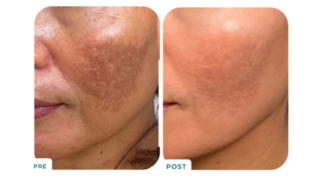
UV light triggers extra melanin production. That shows up as freckles that multiply, flat brown “sun spots” (also called age spots or solar lentigines) and patchy tone across the cheeks, nose and forehead.
Dullness, rough texture and enlarged pores
Sun, sweat and dehydration slow your skin’s natural turnover. Dead cells build up, so skin looks flat and feels rough, and pores look larger.
Fine lines and collagen loss
UV exposure breaks down collagen and elastin over time. This “photoaging” is responsible for much of the visible aging on the face, neck and chest.
Redness and broken capillaries
Heat and sun can leave lingering redness and small visible blood vessels, especially around the nose and cheeks.
When to see a dermatologist first: a spot that is new, changing, bleeding or not healing needs a skin exam before any cosmetic treatment. The American Academy of Dermatology notes that what looks like an age spot can be skin cancer.
Can sun damage be reversed?
Much of the visible damage can be reversed. Surface pigment and texture respond well to peels and lasers, often within a few sessions. Deeper collagen loss improves more gradually and needs a series. Daily sunscreen keeps results from fading, since sunspots can return with new sun exposure.
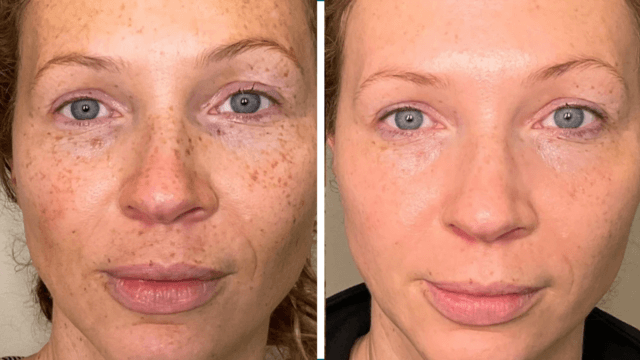
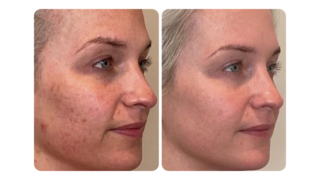
Sun damage and uneven tone on mature skin, before and after a series of BBL + Moxi laser treatments at Elase.
What peels and lasers can’t fix
- Deep wrinkles and sagging respond poorly to peels; they need deeper resurfacing or other treatments.
- Cumulative UV damage to skin cells is not undone by cosmetic treatments, which is why yearly skin checks still matter.
Who should wait before a laser
- A fresh tan (yes, self-tanner too): recent sun raises the risk of burns, blistering and discoloration. Give your skin 2 to 4 weeks to settle before treatment.
- Melanin-rich skin: we treat all Fitzpatrick skin types. Choosing the right laser and settings helps prevent dark or light spots, so a consultation is recommended.
- Pregnant or nursing: press pause on lasers for now. Your provider can suggest gentle options for this season of life.
Not a complete list. Certain medications (like isotretinoin), a history of cold sores and some skin conditions can affect timing. We review your health history before any treatment.
Why is fall the best time for peels and lasers?
Fall is the best time for peels and lasers because UV exposure drops, which lowers the risk of post-treatment dark spots. Cooler weather means less sweat and heat during healing. Starting in October also leaves time to finish a full series before the holidays.
- Safer sun exposure: cooler weather lowers the risk of post-treatment dark spots.
- Smarter recovery: minimal sweat and heat make healing more comfortable.
- Timed for the holidays: start now to finish your full series before the holiday season.
How do chemical peels treat sun damage?
Chemical peels apply an acid solution that removes damaged outer layers of skin, so fresher, more even skin replaces it. Light peels treat dullness and mild discoloration with little downtime. Medium peels reach deeper for age spots and fine lines, with about a week of recovery.
Light vs. medium-depth peels
- Light peels remove the outermost layer. They suit uneven coloring, sun-damaged skin and fine lines. Recovery takes hours to a few days, and most people need 3 to 5 peels spaced 2 to 5 weeks apart.
- Medium peels reach the upper middle layer. They suit moderate discoloration, age spots and fine-to-moderate wrinkles. Expect a week or more of peeling and redness.
Elase offers several types of chemical peels, from gentle exfoliating peels to deeper corrective options. Availability varies by location, so book a consultation and your provider will match the right peel to your skin and goals.
Who should get a peel?
Almost every patient is a candidate for a chemical peel. Results are tailored to your skin, and your provider will guide you to the right type. Darker skin tones have a higher risk of post-inflammatory hyperpigmentation, so providers usually choose gentler formulas.
How do lasers treat sun damage?
Lasers use focused light to break up pigment and trigger new collagen. At Elase, Moxi treats sunspots, uneven tone and texture with little downtime, and BBL targets brown spots and redness. Many patients combine the two in a series for the strongest results.
Moxi: a gentle laser for spots, tone and texture
Moxi by Sciton is a fractional non-ablative 1927 nm laser. It treats tiny columns of skin while leaving the surrounding skin intact, which speeds healing. Sciton recommends 2 to 4 sessions, and the treatment itself takes about 8 to 10 minutes after numbing. Because the wavelength targets water in the skin rather than pigment, Moxi can be used on all skin types
BBL photofacial: for brown spots and redness
BBL (BroadBand Light) is an intense pulsed light treatment that targets brown pigment and visible redness at the same time. It works best on lighter skin tones that are not tanned. Most people do a short series, and your provider will recommend the right number of sessions for your skin.
What does laser recovery look like?
Here is a typical Moxi recovery, day by day. For the full guide, see Moxi Laser Healing Day by Day.
| Phase | What it feels like | Do | Don’t |
| Days 1–2: light sunburn phase | Mild redness and slight swelling | Apply healing balm | Hot showers, intense workouts |
| Days 3–5: sandpaper phase | Rough, dry texture or dark specks | Let skin shed naturally | Scrub, pick or peel |
| Day 6+: glow phase | Brighter skin as dry debris finishes shedding | Gentle hydration, broad-spectrum SPF | Active ingredients (retinoids, AHAs/BHAs) |
Peel vs. laser: which is better for sun damage?
Lasers are usually better for distinct sunspots, redness and texture, and often need fewer sessions. Light chemical peels are better for overall dullness and mild discoloration at a lower cost per visit.
| Concern | Best option | Downtime | Typical sessions | Skin types |
| Sunspots and freckling | Moxi, BBL, or BBL + Moxi | Little to none (Moxi) | 2–4 | Moxi: all; BBL: lighter, untanned |
| Redness and broken capillaries | BBL | Minimal; varies by person | A series, set by your provider | Lighter, untanned |
| Dullness and rough texture | Light peel or Moxi | Hours to a few days | 3–5 peels or 2–4 Moxi | Most |
| Age spots and fine lines | Medium peel or laser series | About 1 week (medium peel) | 1 peel or a laser series | Provider to assess |
| Melanin-rich skin | Moxi or gentle peel | Minimal | 2–4 | All Fitzpatrick types with tailored settings |
Treatment options and pricing vary by location. Book a free skin assessment to get a personalized plan and quote.
Combining peels and lasers in a fall plan
Many patients get the best results by layering treatments: a BBL session to lift brown spots and redness, Moxi for tone and texture, and medical-grade skincare at home. Your provider spaces treatments so skin fully heals between sessions.
No time for downtime?
Radio frequency (RF) microneedling is an option with less visible recovery for texture and firmness.
How do you protect your results?
Protect peel and laser results with broad-spectrum, water-resistant sunscreen of SPF 30 or higher every day, plus sun-protective clothing. Follow your aftercare plan, avoid picking, and restart active ingredients like retinoids only when your provider says skin has healed.
- Wear broad-spectrum SPF 30+ daily, even on cloudy fall days, and reapply outdoors.
- Use gentle hydration during healing; skip scrubs and actives until cleared.
- Keep up a medical-grade at-home routine your provider recommends.
- Book a maintenance treatment each fall to undo the next summer.
Sun damage treatment at Elase
Elase offers a range of chemical peels and laser treatments, including Moxi and BBL. Options vary by location. Not sure which is right for you? Book a free skin assessment, and your provider will build a plan for your skin type and goals.
Save with Beauty Bank membership: members get 10–15% off every visit, all year, on services and skincare, plus a $99 bonus match on their first deposit. Your monthly deposit is 100% yours to spend on any skincare product or treatment.
Frequently asked questions
Can sun damage on the face be reversed?
Yes. Most visible sun damage, including sunspots, uneven tone and rough texture, can be significantly improved with chemical peels and lasers like Moxi and BBL. Deeper collagen damage improves gradually over a series. Daily SPF 30+ keeps results from fading.
Is a chemical peel or laser better for sun spots?
Lasers usually clear distinct sunspots faster and in fewer sessions. Light peels are better for overall dullness and mild discoloration at a lower cost per visit. A provider can recommend one or a combination based on your skin type.
How many sessions does it take to remove sun spots?
Most people need 2 to 4 Moxi sessions or 3 to 5 light chemical peels. Some sunspots fade noticeably after one laser treatment. Your provider will set a plan based on how much pigment you have.
How long after tanning can I get a laser treatment?
Wait 2 to 4 weeks after sun exposure or self-tanner before a laser treatment. Treating tanned skin raises the risk of burns, blistering and discoloration.
Does Moxi remove sun spots?
Yes. Moxi is a gentle 1927 nm fractional laser that targets pigmentation and sun damage, uneven tone and rough texture. Sciton recommends 2 to 4 sessions, with little to no downtime.
Can people with darker skin get laser treatments for sun damage?
Yes. Moxi can be used on all skin types because it targets water in the skin rather than pigment. Choosing the right device and settings helps prevent dark or light spots, so a consultation comes first.
What is the best time of year for laser treatments?
Fall and winter. Lower UV exposure reduces the risk of post-treatment dark spots, and cooler weather makes healing more comfortable. Starting in October leaves time to finish a series before the holidays.
This article is for general information and is not medical advice. Talk with a licensed provider about your skin.
Sources